
What To Know
What to know aboutAirway-Focused Dentistry
The mouth is the front door of the airway. The size and position of the jaws, the tongue, the tonsils and the palate all influence how easily air moves while awake and asleep. Airway-focused dentistry means looking for signs of breathing problems during routine dental care, rather than only checking teeth and gums. At Veda Dental Studio, this is part of how we examine patients of every age.
Many of the signs show up in the mouth first. Worn or flattened teeth from grinding, a scalloped edge on the tongue, a narrow or high palate, crowded teeth, enlarged tonsils and dry, inflamed gums from mouth breathing can all point to a breathing pattern worth a closer look. Patients or parents may also mention snoring, restless sleep, waking unrefreshed, daytime tiredness or, in children, bedwetting and difficulty concentrating.
A dentist cannot diagnose a sleep-breathing disorder such as obstructive sleep apnea. That requires a sleep study ordered by a physician. What a dental team can do is notice the signs, ask the right questions, and refer you to a physician, sleep specialist or ear, nose and throat doctor for evaluation.
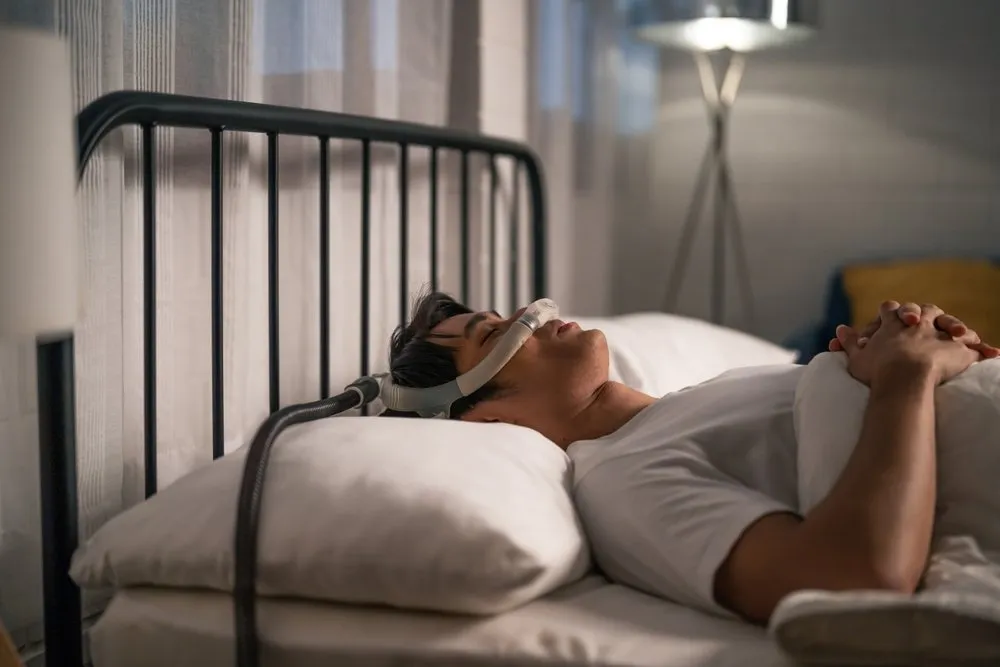
Once a diagnosis is made, dentistry can be part of the treatment plan. For adults, a custom oral appliance that holds the lower jaw slightly forward during sleep is one recognized option for mild to moderate obstructive sleep apnea, or for those who cannot use CPAP. For growing children, orthodontic approaches such as palatal expansion may be considered where the upper jaw is narrow. Some patients are also referred for myofunctional therapy, exercises that train the tongue and facial muscles toward nasal breathing and a healthier resting posture. Care is coordinated with your physician throughout.


Questions
Frequently askedquestions
Answers to the questions patients ask us most, so you feel prepared before your visit.
What is airway-focused dentistry?
It is an approach to dental care that pays attention to how the mouth, jaws and tongue affect breathing, not only to teeth and gums. During routine visits, the dental team looks for signs such as mouth breathing, grinding, a narrow palate or a scalloped tongue, asks about sleep and snoring, and refers patients for medical evaluation when those signs suggest a possible breathing concern.
What signs might suggest an airway problem?
Common signs include loud snoring, pauses in breathing during sleep, waking unrefreshed, morning headaches, daytime tiredness and habitual mouth breathing. In the mouth, a dentist may notice worn teeth from grinding, a scalloped tongue edge, a high or narrow palate, crowding or enlarged tonsils. In children, restless sleep, bedwetting and trouble focusing can also be clues. None of these alone confirms a problem, but they are worth discussing.
Can a dentist diagnose sleep apnea?
No. Obstructive sleep apnea and other sleep-breathing disorders are diagnosed by a physician, usually after a sleep study done at home or in a sleep lab. A dentist's role is to recognize possible signs, refer you for evaluation and, once a diagnosis is made, provide dental treatment such as a custom oral appliance when your physician agrees it is appropriate.
How can dental treatment help with breathing during sleep?
For adults diagnosed with mild to moderate obstructive sleep apnea, or those who cannot tolerate CPAP, a custom oral appliance worn at night can hold the lower jaw slightly forward to help keep the airway open. For growing children with a narrow upper jaw, orthodontic expansion may be considered. The right option depends on the diagnosis and is planned together with your physician.
Why does mouth breathing matter?
Breathing through the mouth for long periods dries the mouth, which can raise the risk of cavities and gum inflammation. In children, a persistent mouth-breathing habit can be associated with changes in how the jaws and face develop. It may also reflect a blocked nose, enlarged tonsils or adenoids, or allergies. Identifying the cause, often with help from a physician, is the first step.
Is airway screening useful for children?
Yes. Children's jaws are still growing, so noticing signs early gives more options. If a child snores, breathes through the mouth, sleeps restlessly or grinds their teeth, the dental team can look for related signs and refer to a pediatrician or ear, nose and throat specialist. Where appropriate, orthodontic approaches can be considered alongside that medical care.
What is myofunctional therapy?
Myofunctional therapy is a program of exercises for the tongue, lips and facial muscles, typically guided by a trained therapist. It aims to encourage nasal breathing, a healthy resting tongue position and proper swallowing. It is sometimes recommended alongside dental or orthodontic care for patients with mouth breathing or tongue-posture habits, and we can refer you if it may help.
What happens at an airway-focused visit?
It begins like a regular exam, with additional questions about sleep, snoring, energy levels and breathing habits. We look closely at the palate, tongue, tonsils, bite and any tooth wear, and may use imaging to view the jaws and airway space. We then explain what we found and whether a referral or further evaluation makes sense.
Will I need to see other specialists?
Often, yes. Airway concerns sit between dentistry and medicine, so care is usually shared. Depending on what we find, you may be referred to your physician, a sleep specialist, an ear, nose and throat doctor or a myofunctional therapist. We coordinate with them so that any dental treatment fits the overall plan and everyone is working from the same information.

Serving Savannah, Pooler
and Port Wentworth
Our studio is at 492 Jimmy DeLoach Pkwy, Suite 104, Savannah, GA 31407, in The Highlands, just off I-95. It is an easy drive from downtown Savannah, Pooler and Port Wentworth, with parking right outside.
New Patients Welcome